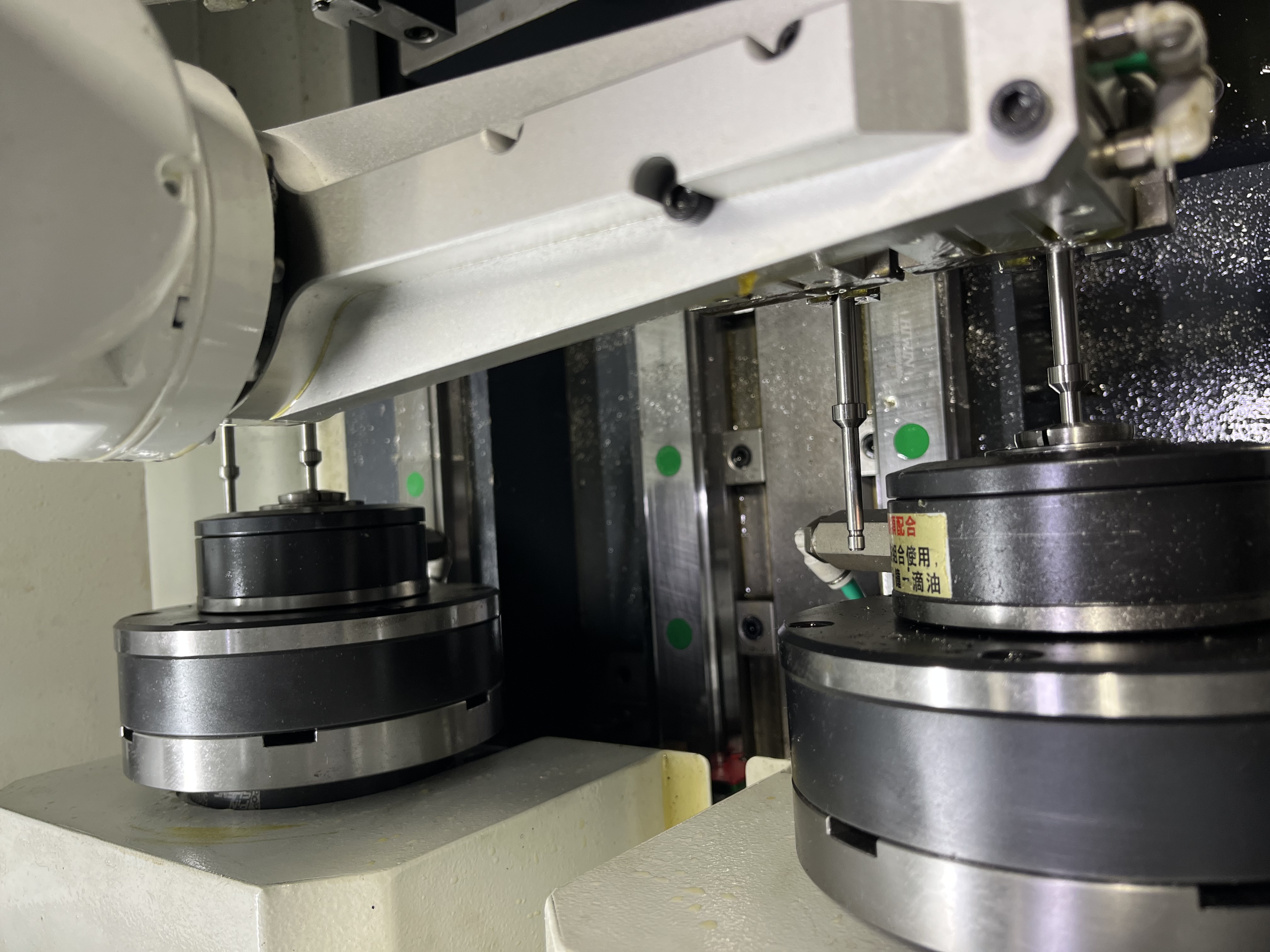
Hydraulic cylinder drift on deep hole drilling machines causes the feed axis to move when it should stay in position. This drift can advance the drill into the bore when it should be retracting, causing tool damage, or it can let the spindle head sag during a tool change, making alignment impossible. I have debugged drift problems on machines ranging from small gun drills to large BTA systems with 10-ton feed forces.
Problem Description
The feed axis in a deep hole drill typically uses a hydraulic cylinder powered by a proportional valve and controlled by the CNC. When the axis is at rest, the valve spool centers and blocks the flow to both sides of the cylinder. If anything allows oil to move past the valve or the piston seal, the axis drifts.
Drift shows up in two ways. The first is during a dwell or peck retract — the spindle head slowly advances or retracts when it should be stationary. The second is between cycles — the axis position shifts when the pump is running but the machine is idle. Either way, the drift causes positional errors that affect hole location and depth.
I consider drift significant when the axis moves more than 0.1mm in one minute with the system at operating pressure. Smaller drift rates are usually within the valve deadband and do not cause practical problems.
Root Cause Diagnosis
Internal Piston Seal Leakage
The most common cause of drift is leakage past the piston seal inside the cylinder. The seal is a wear item that degrades over time. When the seal leaks, oil passes from the high-pressure side of the piston to the low-pressure side, and the cylinder moves.
| Seal Type | Typical Life (hours) | Failure Mode |
|---|---|---|
| U-cup polyurethane | 8,000-12,000 | Lip wear |
| O-ring with backup ring | 5,000-8,000 | O-ring extrusion |
| Piston ring (metal) | 15,000-20,000 | Ring gap wear |
I diagnose piston seal leakage with a simple drift test. I position the cylinder at mid-stroke, lock the directional valve in the neutral position, and apply pressure from the pump. I then measure the cylinder position over one minute. If the cylinder moves more than 0.1mm, the piston seal is leaking.
The fix is disassembling the cylinder and replacing the piston seal. The job takes 2-4 hours on most machines. I always replace the rod seal and wiper at the same time since the cylinder is already apart.
Directional Valve Leakage
The second cause is internal leakage in the directional control valve. The valve spool and bore have a microscopic clearance, typically 0.005-0.015mm. Over time, wear opens this clearance and allows oil to leak past the spool even when it is centered.
| Valve Type | Typical Internal Leakage | Drift Contribution |
|---|---|---|
| New spool valve | 10-50 mL/min | Negligible |
| Worn spool valve | 100-500 mL/min | Significant drift |
| Poppet valve | Near zero | Best for holding |
I distinguish valve leakage from piston seal leakage by blocking the cylinder ports at the valve. I install test plugs in the cylinder ports and apply pressure. If the cylinder still drifts, the seal is leaking. If the drift stops with the ports blocked, the valve is leaking.
Valve leakage usually requires valve replacement. Some valves allow replacing the spool and sleeve as a set, which is cheaper than a full valve assembly.
Air in the System
The third cause is trapped air in the hydraulic fluid. Air compresses under load and expands when the load is removed, causing spongy, unpredictable movement. This is different from true drift because the axis returns to position when the air settles.
I check for air by looking at the cylinder movement under a light load. A jerky or spongy response to a small feed command indicates air. I also check the oil reservoir for bubbles returning in the drain line.
| Air Source | Symptom | Fix |
|---|---|---|
| Suction line leak | Continuous bubbles in reservoir | Tighten suction fittings |
| Low reservoir level | Intermittent air ingestion | Top up hydraulic fluid |
| Worn pump seal | Air mixed into discharge | Replace pump shaft seal |
| Dissolved air release | Foam on reservoir surface | Check oil temperature |
Bleeding air from a hydraulic cylinder takes 10-20 cycles of full-stroke movement with the bleed valve open. I run the axis from end to end 5-10 times while cycling the bleed valve. If air keeps reappearing, there is a suction leak that needs repair.
Drift Measurement Procedure
I follow a consistent procedure when testing for drift. The test must be done at operating temperature and pressure to get meaningful results.
- Run the machine for 30 minutes to warm the hydraulic oil to operating temperature (40-50 degrees).
- Position the feed axis at mid-stroke.
- Set the directional valve to neutral.
- Record the axis position from the CNC readout or a dial indicator.
- Wait one minute and record the position again.
- Calculate the drift rate as the position change divided by time.
| Drift Rate | Severity | Action |
|---|---|---|
| Below 0.05 mm/min | Normal, acceptable | No action needed |
| 0.05-0.10 mm/min | Marginal | Monitor, plan maintenance |
| 0.10-0.20 mm/min | Moderate | Investigate and schedule repair |
| Above 0.20 mm/min | Severe | Stop machine, repair immediately |
I run the test three times to confirm the result. A single reading can be misleading because of temperature effects or air bubbles. If the drift rate is consistent across all three tests, the cause is seal or valve leakage. If the drift rate varies, air is more likely.
Prevention
Preventing drift starts with keeping the hydraulic oil clean. Contaminated oil accelerates valve and seal wear. I change the hydraulic oil filter annually and test the oil quality every six months.
For machines with proportional valves, I installed accumulators on the cylinder ports. The accumulator maintains pressure on both sides of the cylinder when the valve is centered, which compensates for minor internal leakage and holds the axis steady.
I also set the machine to power down the hydraulic pump during extended idle periods. With the pump off, there is no pressure to drive drift. This is the simplest prevention method.
Key Takeaways
- Drift of more than 0.1mm in one minute at operating pressure requires investigation.
- Block the cylinder ports at the valve to distinguish piston seal leakage from valve leakage.
- Piston seal replacement takes 2-4 hours and should include the rod seal and wiper.
- Accumulators on the cylinder ports compensate for minor internal leakage.
- Power down the hydraulic pump during extended idle periods to prevent drift.