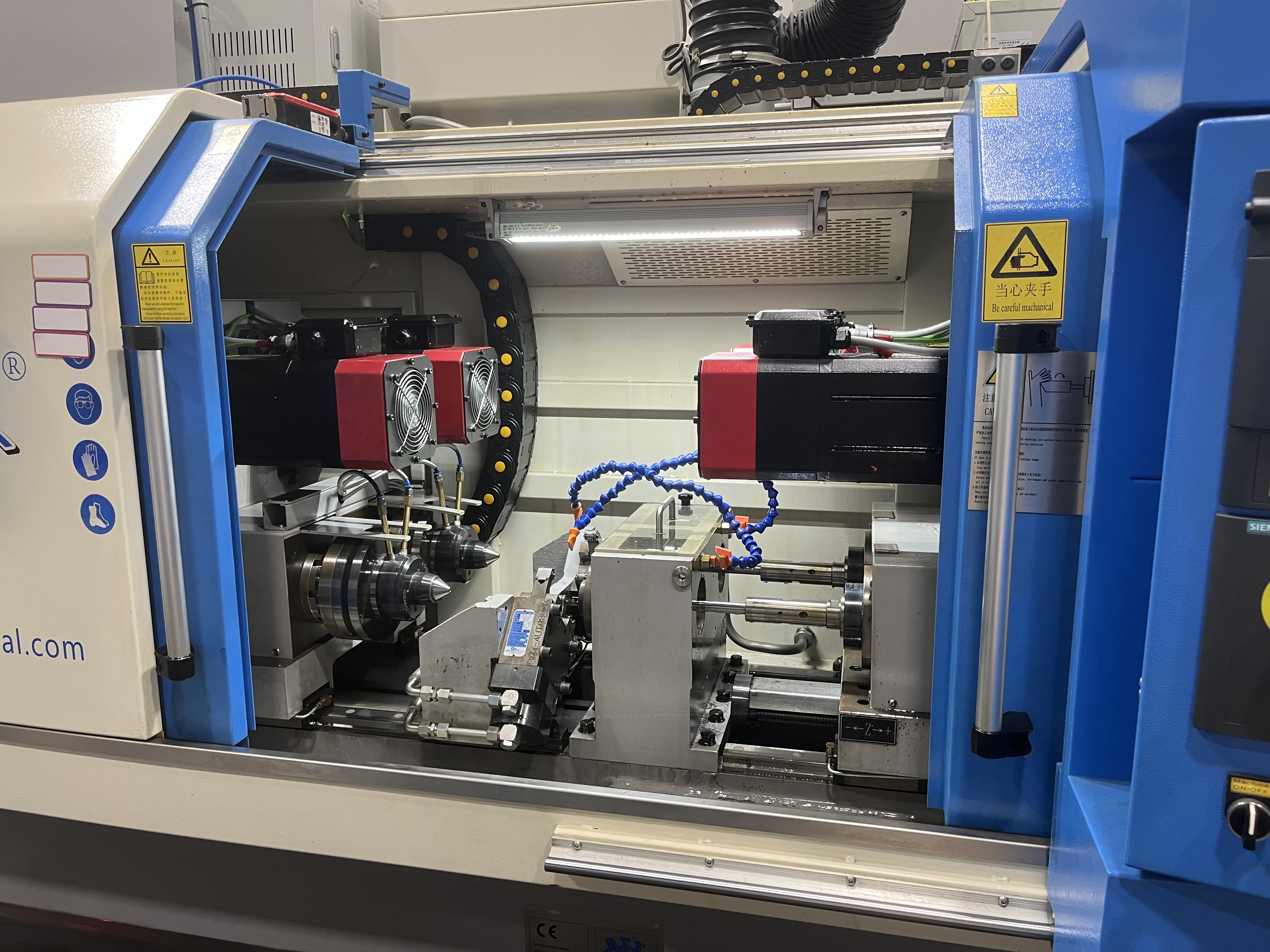
The Thermal Reality of Machine Tools
Every machine tool changes shape as it warms up. Steel expands by roughly 0.012mm per meter for every 1 degree C temperature increase. A 2-meter bed that heats up by 5 degrees C grows by 0.12mm. That is enough to push a hole out of tolerance.
I have measured this on my own machines. A cold machine at 18 degrees C in the morning produces different hole positions than the same machine at 28 degrees C after running for two hours. The difference is not hypothetical — it shows up on every first-part inspection.
Thermal effects are the most common cause of first-part variation that I see in production. The machine geometry at 8 AM is not the same as the geometry at 10 AM. Ignoring thermal drift means accepting inconsistent first parts.
I have seen shops that try to compensate by measuring the first part and adjusting offsets. That works for that one part, but the next part will be different because the machine is still changing. Warm-up is the only reliable solution.
What Changes During Warm-Up
Spindle Growth
The spindle housing heats up from bearing friction and from the motor. As the housing warms, it expands and the spindle centerline rises. I measure this with a test bar and indicator during warm-up.
| Warm-Up Time | Spindle Centerline Rise | Typical Stabilization |
|---|---|---|
| 0-5 minutes | 0.005-0.010mm | Fast initial rise |
| 5-15 minutes | 0.010-0.025mm | Slowing |
| 15-30 minutes | 0.025-0.040mm | Near stable |
| 30-60 minutes | 0.040-0.050mm | Fully stable |
The rise is not linear. The spindle heats up quickly in the first few minutes and then the rate of change slows. I see most of the movement in the first 15 minutes.
Bed and Column Growth
The machine bed and column also expand as coolant and cutting heat spread through the machine. The bed grows in length, which shifts the tailstock or steady rests relative to the spindle.
The column on a horizontal machine grows upward. I have seen vertical machining centers where the Z-axis position drifts by 0.03mm as the column warms up. That drift shows up as a depth error in deep hole drilling.
Coolant Temperature
Coolant temperature is the biggest wild card. The coolant absorbs heat from the cutting zone and carries it to the machine. If the coolant temperature rises over the course of the day, the machine temperature rises with it.
Without a chiller, I have measured coolant temperature rise of 10 degrees C over an 8-hour shift. That temperature change expands every part of the machine that the coolant touches. With a chiller set to 25 degrees C, the coolant stays within 1 degree C all day.
My Warm-Up Procedure
Step-by-Step
I use a timed warm-up routine that covers all the machine components. The sequence makes sure the spindle, axes, and coolant system all reach operating temperature before the first production cut.
| Step | Duration | Action |
|---|---|---|
| 1 | 5 minutes | Coolant circulation on, no spindle |
| 2 | 5 minutes | Spindle at 500 RPM, axes stationary |
| 3 | 10 minutes | Spindle at operating RPM (3000-8000 RPM) |
| 4 | 10 minutes | All axes through full travel range at cutting feed |
| 5 | 5 minutes | Verify spindle and coolant temperatures |
Total time is 35 minutes. The coolant pump starts first because the coolant needs to flow through the spindle and machine passages to warm them.
Verification
I verify that the warm-up is complete by checking the spindle housing temperature with an infrared thermometer. The housing should be within 2 degrees C of its stabilized running temperature for the warm-up to be adequate.
On critical jobs, I also check the spindle centerline height before and after warm-up using a test bar. The difference tells me whether the warm-up has done its job.
Special Considerations
Interrupted Production
A machine that has been sitting idle for 30 minutes during lunch has cooled down enough to change geometry. I run a shortened warm-up of 10 minutes after any break longer than 30 minutes.
| Break Duration | Warm-Up Needed |
|---|---|
| Under 15 minutes | No warm-up needed |
| 15-60 minutes | 10 minutes |
| 1-4 hours | 20 minutes |
| Overnight | Full 35-minute procedure |
I have measured 0.02mm of spindle centerline shift after a lunch break in a shop without air conditioning. The quick warm-up prevents that from affecting the first part after break.
Coolant Chiller Setup
A coolant chiller makes the biggest difference in thermal stability over long production runs. I set the chiller to 25 degrees C and let it run continuously, even when the machine is idle.
The chiller maintains consistent coolant temperature throughout the day. That consistency translates into consistent machine geometry from the first part to the last.
Key Takeaways
- Run a 35-minute warm-up sequence before production every day.
- Coolant circulation must start first and run throughout warm-up.
- Use an infrared thermometer to verify spindle housing temperature.
- Run a shortened warm-up after any break longer than 15 minutes.
- Install a coolant chiller set to 25 degrees C for long-run thermal stability.