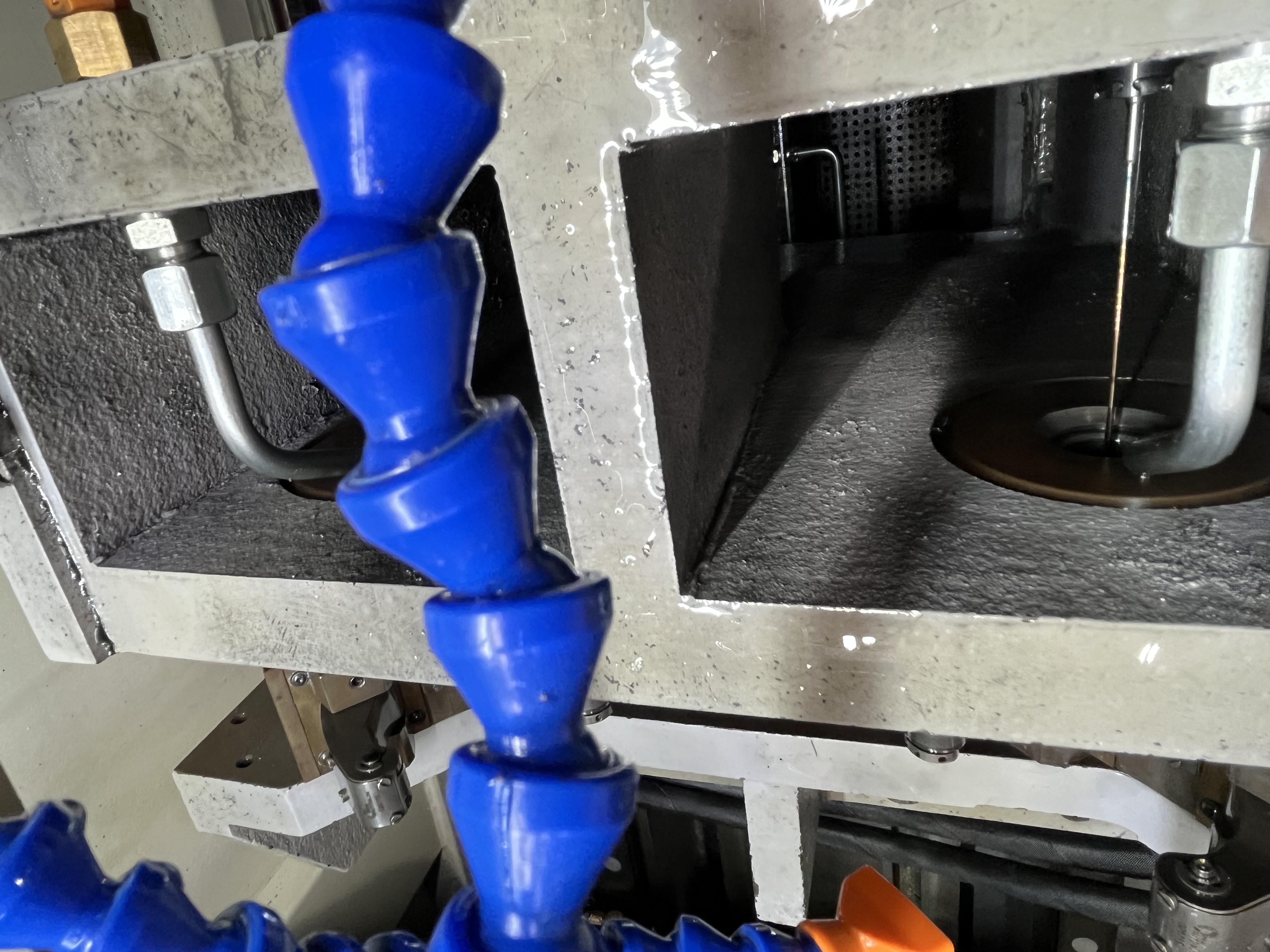
Thin wall tube collapse during deep hole drilling is a problem I have encountered on hydraulic cylinders, gun barrels, and structural tubing. The cutting force pushes the tube wall inward, the drill binds in the reduced diameter, and both the tube and the tool are damaged. Prevention requires managing the forces on the wall and providing adequate support.
Problem Description
A thin wall tube collapses when the radial component of the cutting force exceeds the buckling strength of the wall section. The tube wall deflects inward under the drill tip, and the bore diameter effectively shrinks. The drill then jams because the bore is smaller than the drill head.
I have seen this happen on tubes with wall thickness below 3mm, especially in soft materials like aluminum and mild steel. The collapse is sudden and complete — one second the drill is cutting normally, the next second it is stuck and the tube has a flat spot on the OD.
| Wall Thickness | Collapse Risk | Support Required |
|---|---|---|
| Above 5mm | Low | Standard steady rests |
| 3-5mm | Moderate | Mandrel or internal plug |
| 2-3mm | High | Mandrel + reduced feed |
| Below 2mm | Very high | Fill material + mandrel |
Internal Support Methods
Mandrel Support
A mandrel is the most effective internal support for thin wall tube drilling. The mandrel is a precision-ground rod that fits inside the tube and supports the wall directly at the cutting zone. The mandrel diameter should be within 0.3-0.5mm of the tube ID to provide support while allowing the mandrel to be inserted and removed.
I use a hardened steel mandrel for most applications. The mandrel has a center hole that allows the drill to pass through. The drill cuts through the tube wall and enters the mandrel center hole, which supports the wall from the inside at the exact point where the cutting force is applied.
| Mandrel Type | Material | Best For |
|---|---|---|
| Hardened steel | Tool steel, 60 HRC | General purpose, high production |
| Ground drill rod | 52100 steel | Short runs, custom sizes |
| Split collet style | Spring steel | Tubes with slight ID variation |
Fill Material
For tubes under 2mm wall thickness, a mandrel alone is not enough. I fill the tube with a support material that provides continuous internal support along the full drilling length.
Sand is the simplest fill material. I pack dry sand into the tube and compact it with a rod. The sand supports the wall against radial forces and dampens vibration. After drilling, I dump the sand out. The cleanup takes a few minutes but the collapse prevention is worth it.
Low-melt alloy is better for precision work. I use a bismuth-tin alloy that melts at 70 degrees Celsius. I pour the molten alloy into the tube, let it solidify, drill through it, and then melt it out in hot water. The alloy provides rigid support that prevents any wall deflection.
| Fill Material | Support Quality | Cleanup Effort | Reusable |
|---|---|---|---|
| Dry sand | Good | Moderate | Yes |
| Low-melt alloy | Excellent | Easy | Yes |
| Polymer filler | Good | Difficult | No |
| Ice (water freeze) | Moderate | Easy | Yes |
Cutting Parameter Adjustments
Feed Rate
The feed rate directly controls the cutting force on the wall. A lower feed reduces the force and lowers the collapse risk. I reduce the feed by 30-50% compared to solid material for thin wall tube drilling.
| Wall Thickness | Feed Reduction | Typical Feed for Steel |
|---|---|---|
| Above 5mm | 0% | 0.03-0.05 mm/rev |
| 3-5mm | 20% | 0.025-0.04 mm/rev |
| 2-3mm | 30-40% | 0.02-0.03 mm/rev |
| Below 2mm | 50% | 0.015-0.025 mm/rev |
Steady Rest Pressure
The steady rest supports the tube from the outside, but excessive pressure can itself collapse a thin wall tube. I set the steady rest pressure as low as possible while still controlling vibration.
I use rollers with rubber or nylon contact surfaces for thin wall work. The compliant surface distributes the support force over a larger area and reduces the local pressure on the wall. For tubes under 3mm wall thickness, I reduce the steady rest hydraulic pressure by 30-50% from the standard setting.
Cutting Speed
Cutting speed has less direct effect on collapse than feed, but it affects the heat generated. Excessive heat softens the tube wall and reduces its collapse strength. I keep the cutting speed at or below the recommended level for the material and rely on coolant flow for heat removal.
Inspection and Verification
I check the tube OD at regular intervals during drilling. A collapse shows as a visible flat spot or dent on the tube surface. I also listen for a change in the drilling sound — a collapse produces a dull thud followed by a torque spike.
After drilling, I measure the tube OD at the drilled section with calipers. Any reduction in OD compared to the undrilled section indicates wall collapse. The reduction should be less than 0.1mm for the part to be acceptable.
Key Takeaways
- Tubes under 3mm wall thickness require internal support to prevent collapse during drilling.
- Use a hardened steel mandrel with a center hole for drill passage as the primary support method.
- Fill tubes under 2mm wall thickness with sand or low-melt alloy for full internal support.
- Reduce feed by 30-50% and steady rest pressure by 30-50% for thin wall tubes.
- Check tube OD before and after drilling to verify no collapse has occurred.