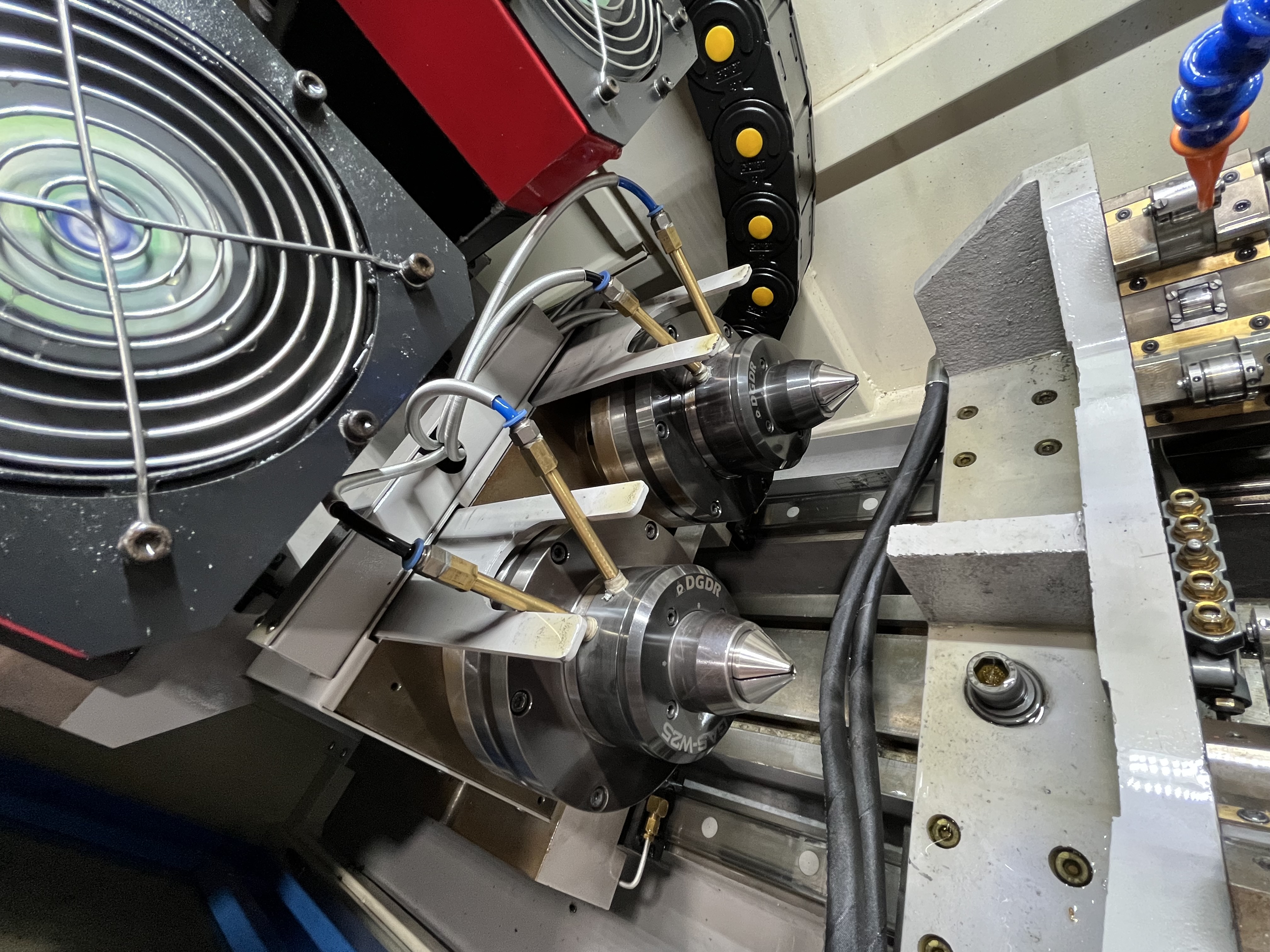
Drive faults on deep hole drilling machines stop production immediately and can be difficult to diagnose if you do not know what to check. The typical symptoms are an alarm on the CNC display, a drive module showing a red fault LED, or an axis that refuses to move. I have worked through servo drive faults on Fanuc, Siemens, and Mitsubishi systems, and the diagnostic approach is mostly the same regardless of the brand.
Problem Description
A drive fault means the servo drive or spindle drive has detected a condition outside its safe operating range and has shut down to prevent damage. The drive monitors current, voltage, temperature, and encoder feedback continuously. When any parameter exceeds the threshold, the drive trips and displays an alarm code.
The machine stops with the axis in its current position. In deep hole drilling, this can leave the drill inside the bore, which requires careful recovery to avoid tool damage. The fault must be diagnosed and cleared before the machine can run again.
Common Fault Types
| Fault Code Type | Meaning | Frequency |
|---|---|---|
| Overcurrent | Current exceeds drive rating | Common, 40% of faults |
| Overvoltage | DC bus voltage too high | Common, 25% of faults |
| Encoder loss | No feedback from motor | Moderate, 20% of faults |
| Overtemperature | Drive or motor too hot | Occasional, 10% of faults |
| Communication error | Lost signal to CNC | Rare, 5% of faults |
Overcurrent Faults
Overcurrent faults are the most common drive fault I see. They mean the current drawn by the motor exceeded the drive’s rated maximum. The cause is either a mechanical bind that forces the motor to work harder, or an electrical short circuit.
I start by checking for mechanical binding. On a feed axis, I move the axis by hand using a bar on the ball screw. If the axis moves freely, the problem is not mechanical. If it binds, I check the guide ways, ball screw, and thrust bearings for damage.
If the axis moves freely, the problem is electrical. I disconnect the motor cable from the drive and measure the resistance between the motor phases. The three phases should have equal resistance, typically 1-5 ohms depending on the motor size. A short between any two phases or a phase-to-ground reading below 1 megohm means the motor cable or motor winding is damaged.
| Resistance Measurement | Meaning |
|---|---|
| All three phases equal (1-5 ohm) | Motor winding OK |
| One phase open (infinite) | Broken motor winding or cable |
| Phase-to-phase short (near zero) | Short circuit in motor or cable |
| Phase-to-ground (below 1 MOhm) | Insulation breakdown |
I also check the motor brake. A brake that does not release draws high current and causes an overcurrent fault. The brake voltage should be present at the motor connector when the drive is enabled.
Overvoltage Faults
Overvoltage faults occur when the DC bus voltage in the drive rises above the maximum safe level. This happens when a decelerating axis returns energy to the drive faster than the drive can dissipate it.
The braking resistor is the first thing I check. The resistor absorbs the regenerative energy from deceleration. If the resistor is open circuit (infinite resistance), the energy has nowhere to go and the voltage spikes. I measure the resistor with a multimeter. A typical braking resistor measures 10-100 ohms depending on the drive size.
If the resistor is good, I check the drive’s deceleration settings. A deceleration time that is too short generates more regenerative energy than the resistor can handle. I increase the deceleration time in 10% increments until the fault stops.
Encoder Faults
Encoder faults mean the drive has lost feedback from the motor. Without feedback, the drive cannot control position or speed and shuts down.
Loose encoder cables are the most common cause. The vibration from the machine works the connector loose over time. I reseat the connector at both the motor and the drive end and check for bent pins.
Damaged encoder cables are the second cause. The cable drags on the machine or gets pinched during axis movement. I inspect the cable along its full length for cuts, kinks, or crushed sections. A cable that has been pinched has internal wire breaks that cause intermittent faults.
If the connector and cable are good, the encoder itself may be faulty. Encoder failure is rare but happens, especially on machines running three shifts with high ambient temperature. I check the encoder by swapping it with a known-good motor if one is available.
| Encoder Problem | Symptom | Diagnosis |
|---|---|---|
| Loose connector | Intermittent fault, clears on reset | Reseat and secure connector |
| Damaged cable | Fault at specific axis position | Flex cable while monitoring signal |
| Failed encoder | Permanent fault, no recovery | Replace encoder or motor |
Overtemperature Faults
Overtemperature faults occur when the drive heatsink or the motor temperature exceeds the rated limit. I check the drive cooling fan first. A clogged fan or a failed fan motor causes the drive to overheat within minutes of operation.
On the motor side, I check for excessive load. A motor that is running at 100% load continuously generates more heat than it can dissipate. I check the spindle load or axis load display on the CNC. If the load is above 80% of rated, the motor will overheat.
Prevention and Spare Parts
I keep spare drive modules for the most common machine models in the shop. Swapping a drive module takes about 30 minutes and gets the machine running while the failed module goes out for repair.
For machines more than 10 years old, I stock spare IGBT modules and capacitors for the drives. These components have a finite life and fail more often as the machine ages. Replacing the DC bus capacitors every 5-7 years prevents a significant portion of drive faults.
I also keep the electrical cabinet cool. A cabinet temperature below 40 degrees extends the life of all electronic components. I clean the cabinet air filters monthly and check the cabinet fan operation weekly.
Key Takeaways
- Check mechanical binding first on overcurrent faults before diagnosing electrical problems.
- Measure the braking resistor on overvoltage faults — an open resistor is the most common cause.
- Reseat encoder connectors and inspect cables for damage before replacing the encoder.
- Keep spare drive modules for the most common machines to minimize downtime.
- Clean cabinet filters monthly and maintain cabinet temperature below 40 degrees for drive reliability.