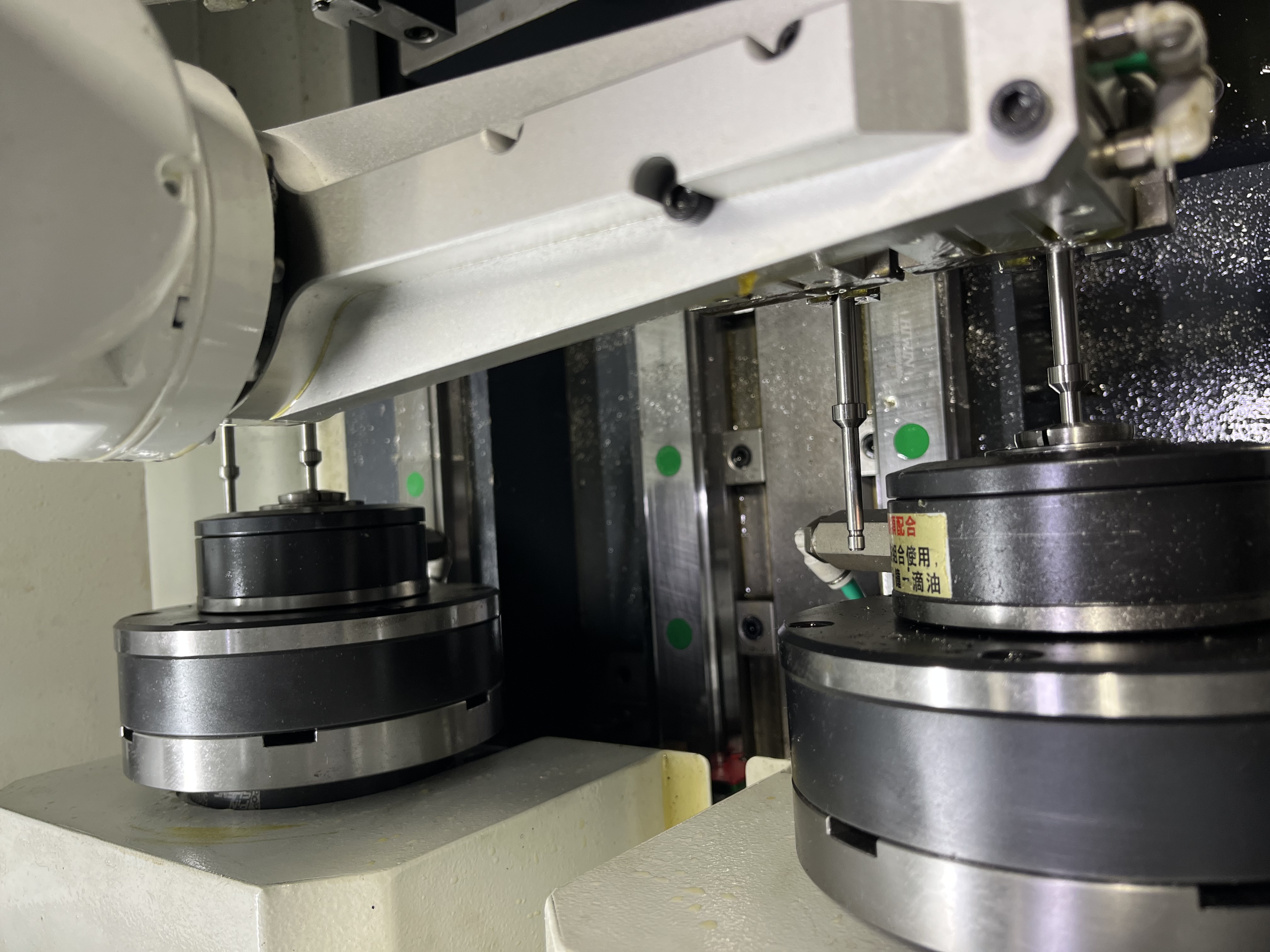
Why Spot Facing Is Not Optional
Spot facing creates a flat surface at the hole entry point that is perpendicular to the drill axis. Without it, the drill enters a curved or angled surface and the tip deflects on contact. That deflection at entry starts the hole off-center.
I have seen operators skip spot facing to save time. The logic sounds reasonable — why take an extra pass if the part surface looks flat? The problem is that looks are deceiving. A surface that appears flat to the eye can be 0.1mm out of perpendicular.
That 0.1mm error at entry causes the drill to wander by 0.2mm at 100mm depth. The error multiplies linearly with depth. At 300mm depth, the hole is 0.6mm off position. That is scrap.
The time saved by skipping spot facing is always lost in troubleshooting later. I have made it a mandatory step in every job setup, regardless of how flat the surface looks.
How Spot Face Errors Affect the Hole
Entry Deflection Mechanics
When a drill contacts an angled surface, the cutting edge on the high side engages first. The tip experiences a sideways force that pushes it away from the high side. The hole starts off-center and the offset grows as the drill advances.
The relationship between surface angle and hole offset is direct. Every 0.01mm of surface irregularity at entry produces about 0.02mm of hole offset at 100mm depth. The multiplier is approximately 2 at shallow depths and increases with depth.
| Surface Flatness Error | Hole Offset at 100mm | Hole Offset at 300mm |
|---|---|---|
| 0.05mm | 0.10mm | 0.30mm |
| 0.10mm | 0.20mm | 0.60mm |
| 0.20mm | 0.40mm | 1.20mm |
Surface Types That Require Spot Facing
Some surfaces need spot facing more than others. I always spot face on these surface types:
| Surface Type | Why It Needs Spot Facing |
|---|---|
| Cast surfaces | Hard outer skin, uneven surface, scale |
| Forged surfaces | Scale, draft angles, uneven texture |
| Weld beads | Irregular profile, hard spots |
| Angled surfaces | Drill cannot start on a slope |
| Heat-treated surfaces | Decarburized layer, hard case |
Cast surfaces are the worst. The combination of hard scale and uneven surface means the drill has no chance of starting straight. I take a deeper spot face on castings — 2-3mm minimum — to get below the scale layer.
Existing Features That Cause Problems
Existing features like drilled holes, threaded holes, or keyways near the entry point also affect the start. If the drill entry point is near an existing feature, the surface may be interrupted or distorted.
I spot face over the entire entry area to create a clean, continuous surface. The spot face must be larger than the drill diameter by at least 2mm to ensure the drill starts on a flat surface.
Spot Facing Best Practices
Tool Selection
I use a spot face cutter with a pilot that fits the guide bushing bore. The pilot keeps the spot face concentric with the drill axis. A cutter without a pilot can produce an off-center spot face, which defeats the purpose.
| Tool Feature | Benefit |
|---|---|
| Pilot bushing | Maintains concentricity with drill axis |
| Carbide inserts | Consistent edge life on scale and hard surfaces |
| Through-coolant | Flushes chips from the cutting area |
| Adjustable depth stop | Repeatable depth on multiple parts |
The pilot diameter must match the guide bushing bore within 0.01mm. A loose pilot allows the cutter to shift during the facing cut, producing an off-center spot face.
Cutting Parameters
Spot facing parameters are different from drilling parameters. The cutter runs at a higher RPM and lower feed than the drill because the cutting forces are different.
| Material | Spot Face Speed | Spot Face Feed | Depth of Cut |
|---|---|---|---|
| 4140 steel | 80-100 m/min | 0.05-0.10 mm/rev | 1-2mm |
| 4340 steel | 70-90 m/min | 0.04-0.08 mm/rev | 1-2mm |
| 6061 aluminum | 200-300 m/min | 0.10-0.15 mm/rev | 1-2mm |
| 316 stainless | 50-70 m/min | 0.03-0.06 mm/rev | 0.5-1mm |
I take a single finishing pass at the final depth rather than multiple roughing passes. The single pass produces a cleaner surface and avoids work hardening on stainless materials.
Depth and Diameter
The spot face depth should be sufficient to create a clean, uninterrupted surface. For most materials, 1-2mm is adequate. For castings with heavy scale, I take 2-3mm to get below the hard outer layer.
The spot face diameter should be at least 2mm larger than the drill diameter. This ensures the entire drill tip engages on a flat surface at entry. A spot face that is the same size as the drill does not help — the drill tip extends beyond the flat area.
Inspection
I inspect the spot face before drilling. The inspection is visual — I look for a clean, uniform surface with no visible marks, scale, or irregularity. If the spot face has chatter marks or uneven areas, I recut it.
I also check the spot face depth with a depth micrometer. Consistent depth across multiple parts ensures consistent starting conditions. Variation of more than 0.1mm in spot face depth indicates a setup problem.
Common Spot Facing Problems
Chatter on the Spot Face
Chatter marks on the spot face transfer to the bore surface. If the spot face cutter chatters, the drill starts on a rough surface and the roughness affects the hole entry.
Chatter on the spot face is usually caused by excessive overhang on the cutter or insufficient rigidity. I reduce the cutter overhang to the minimum possible and increase the feed rate slightly to dampen vibration.
Off-Center Spot Face
An off-center spot face defeats the purpose of spot facing. The drill starts on a flat surface, but the surface is not centered on the drill axis. The hole starts in the wrong position.
Off-center spot faces are caused by a worn pilot bushing or a loose cutter. I check the pilot fit before every spot facing operation and replace any pilot with more than 0.01mm clearance.
Key Takeaways
- Spot face every entry surface — a flat-looking surface is rarely flat enough.
- Surface errors at entry multiply with depth. A 0.1mm error produces 0.6mm offset at 300mm.
- Use a spot face cutter with a pilot bushing that fits the guide bushing bore.
- Take a single pass 1-2mm deep (2-3mm on castings) at the appropriate speed.
- Inspect the spot face before drilling — visual check and depth measurement.
- Never skip spot facing to save time. The time saved is lost in troubleshooting and scrap.