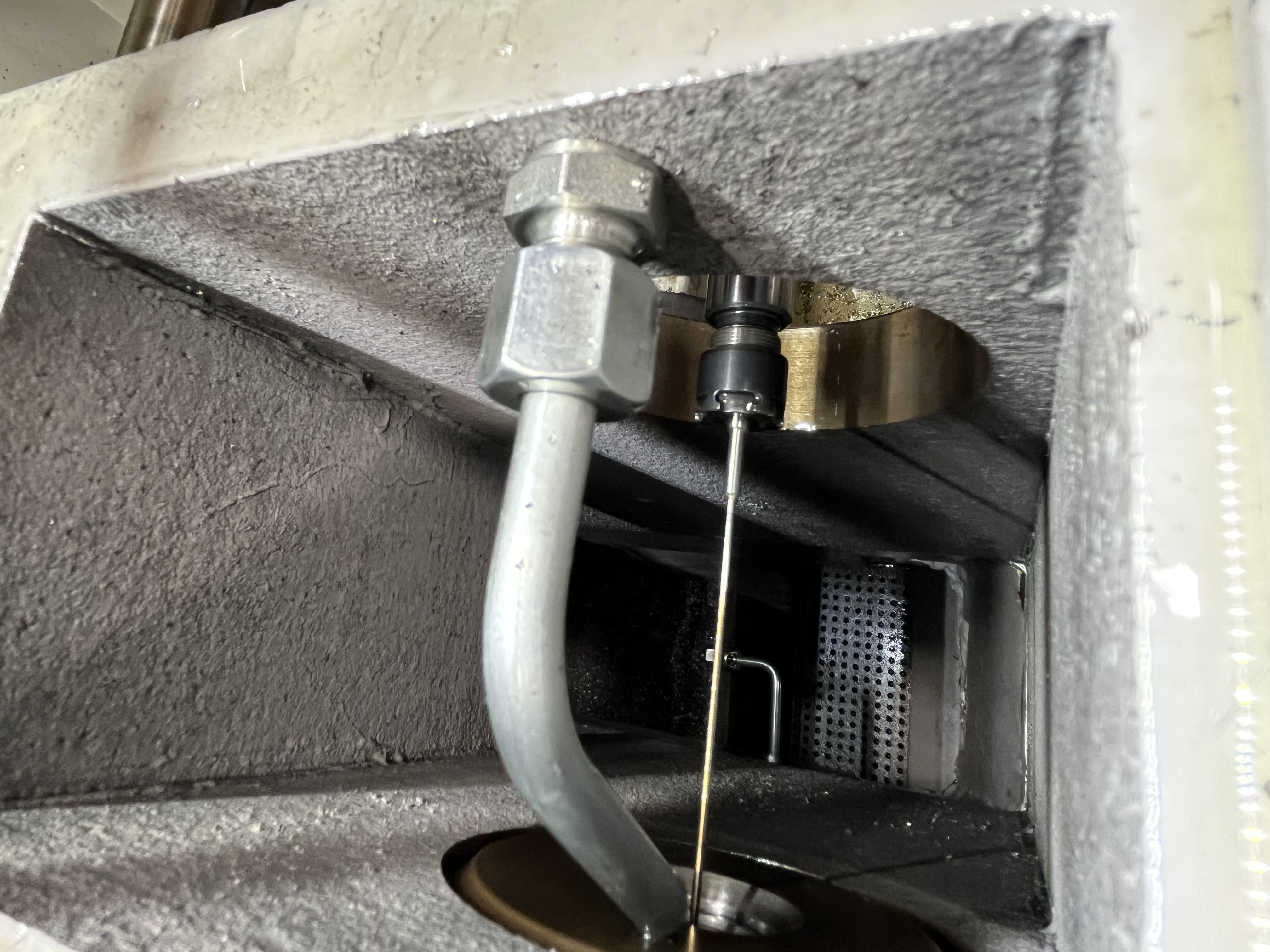
The Thermal Drift Problem
Every machine tool changes dimension as it heats up. The spindle grows, the bed expands, the leadscrews lengthen. In deep hole drilling, this thermal drift causes the hole position to shift relative to the part datum. A machine that is perfectly aligned when cold at 7:00 AM can be out of position by 0.10 mm or more by 10:00 AM.
The effect is most noticeable on long holes where the spindle position relative to the workpiece changes during the cut. I have measured thermal drift of 0.05-0.15 mm on a 1-meter bed length over a 4-hour production run. On parts with hole position tolerance of 0.10 mm, this drift can push parts out of spec.
Machine Warm-Up Routine
The simplest and most effective thermal compensation is a proper warm-up routine. I run the machine for 30 minutes before starting production. The warm-up brings the machine to thermal equilibrium so the dimensions stabilize.
An effective warm-up cycle includes:
- Spindle rotation at operating speed (3000-6000 RPM for gun drills)
- Axis motion over the full travel range
- Coolant circulation at operating pressure
- All three together, not sequentially
I have found that running the spindle alone is not enough. The axis drives and the coolant system also generate heat that affects the machine structure. A complete warm-up cycles all systems.
For machines that run 24/7, the thermal condition is stable after the first 30 minutes of the week. For machines that are turned off overnight, the warm-up is essential every morning. I have machines that show 0.08 mm of position change between cold start and warm condition.
Active Thermal Compensation Systems
Modern CNC controls can compensate for thermal drift automatically. Temperature sensors mounted on the spindle housing, bed, leadscrews, and coolant tank feed data to the control. The control calculates the thermal growth of each axis and adjusts the position commands accordingly.
I use active thermal compensation on machines that run tight-tolerance jobs (hole position tolerance below 0.05 mm). The compensation reduces the warm-up time from 30 minutes to about 5 minutes and improves first-part accuracy significantly.
| Component | Sensor Location | Typical Growth at Steady State |
|---|---|---|
| Spindle housing | Front bearing housing | 0.02-0.05 mm |
| Bed / column | Mid-height on the structure | 0.03-0.08 mm per meter |
| Ball screw | Near the fixed bearing | 0.01-0.03 mm per meter |
| Coolant tank | In the tank or supply line | Affects bed temperature |
The compensation parameters need calibration for each machine. I run a test cycle that measures the position drift over time and adjust the compensation parameters in the CNC. The test uses a touch probe to measure a reference part every 15 minutes during a 4-hour warm-up cycle. The position change vs. temperature sensor readings are recorded and entered into the compensation algorithm.
Scheduling Strategy Without Compensation
If the machine does not have active thermal compensation, I use scheduling to manage thermal effects. The key is knowing when the machine is stable and planning work accordingly.
I schedule the production day in three phases:
| Phase | Time | Machine Condition | Suitable Work |
|---|---|---|---|
| Warm-up | 0-30 min | Heating up, position drifting | Roughing ops on non-critical parts |
| Stable | 30 min - 6 hours | Thermal equilibrium | Tight-tolerance work |
| Mid-day break | 6 hours | Machine cools if stopped | Plan around breaks |
During the stable period, the machine position is within 0.01 mm of its equilibrium position. This is the window for tight-tolerance holes.
If the machine stops for a lunch break or shift change, it cools down and the position shifts again. I account for this by scheduling critical work in blocks that do not cross breaks, or by running the machine through breaks in a low-power idle mode.
Shop Temperature Control
The shop environment temperature affects machine accuracy as much as the machine’s own heat generation. I have measured a 0.03 mm position change per degree C of shop temperature change on a 1-meter bed.
I control the shop temperature to within 3 degrees C during the production day. A shop that varies by more than 5 degrees C during the day causes position changes that affect hole accuracy for tight-tolerance work.
For highest accuracy (tolerances below 0.02 mm), I use a temperature-controlled enclosure around the machine. The enclosure maintains the machine temperature within 1 degree C regardless of shop temperature changes.
Coolant Temperature Control
The coolant temperature has a direct effect on the machine temperature. Cold coolant from the tank cools the machine structure unevenly. I maintain coolant temperature within 5 degrees C of the machine temperature.
A chiller on the coolant system helps stabilize thermal conditions. I set the chiller to maintain coolant temperature at 30 degrees C during operation. This matches the typical machine equilibrium temperature and minimizes thermal gradients.
Without a chiller, I monitor coolant temperature and adjust the warm-up procedure to account for seasonal variations. The machine takes longer to stabilize in winter (20 degrees C shop) than in summer (30 degrees C shop) because the coolant starts colder.
Key Takeaways
- Run a 30-minute complete warm-up (spindle + axes + coolant) before production.
- Active thermal compensation reduces warm-up time and improves first-part accuracy.
- Schedule tight-tolerance work during the stable period (30 min to 6 hours after startup).
- Control shop temperature within 3 degrees C for consistent hole accuracy.
- Maintain coolant temperature within 5 degrees C of the machine temperature.