Understanding Thermal Drift
Thermal drift is the change in machine geometry caused by temperature changes. Every material expands when heated. A 2-meter steel bed grows by 0.024mm for every 1 degree C increase. Over an 8-hour shift, the machine can change shape by enough to push holes out of tolerance.
I have measured the effects of thermal drift on three different machine tools. Every one of them showed measurable geometry changes from cold start to stabilized running temperature. The changes ranged from 0.02mm to 0.08mm depending on the machine size and construction.
Thermal drift is not a defect. It is a physical reality of machining. The goal is not to eliminate thermal drift — that is impossible. The goal is to manage it so it does not affect part quality.
The key insight is that thermal drift is predictable and repeatable. A machine that drifts by 0.04mm during warm-up does the same thing every day. Once you understand the pattern, you can compensate for it.
Sources of Thermal Drift
Machine Warm-Up
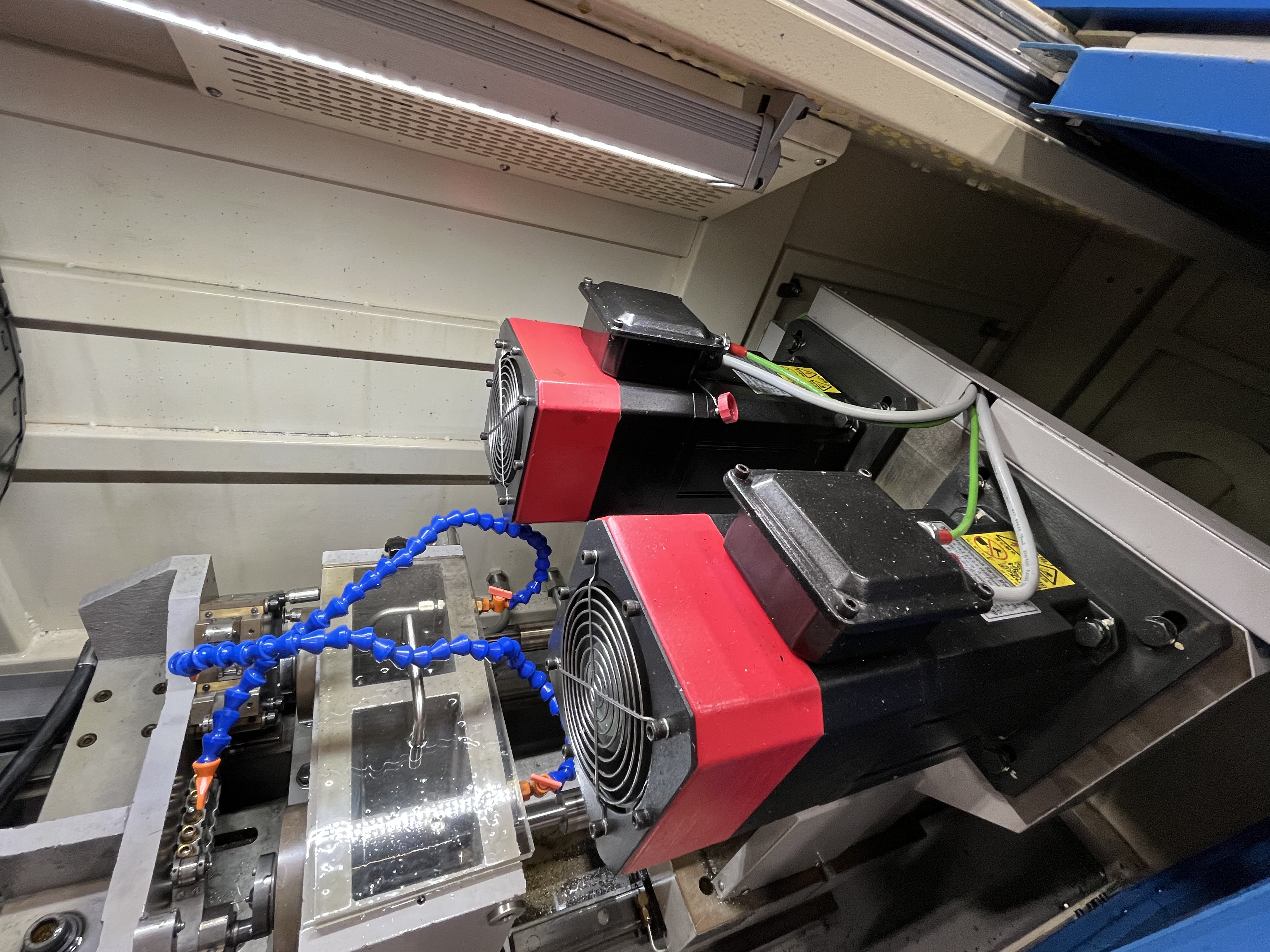
The machine itself generates heat from the spindle bearings, axis motors, hydraulic systems, and coolant pump. As these components warm up, the heat spreads through the machine structure and causes expansion.
The spindle housing is the most significant heat source. The bearings generate friction heat that raises the housing temperature by 5-15 degrees C above ambient. The spindle centerline rises as the housing expands upward.
| Machine Component | Temperature Rise | Effect on Geometry |
|---|---|---|
| Spindle housing | 5-15 C | Centerline rises 0.02-0.05mm |
| Bed ways | 2-5 C | Length increases 0.01-0.03mm/m |
| Column | 3-8 C | Height increases 0.02-0.04mm |
| Coolant tank | 5-20 C | Transfers heat to entire machine |
The warm-up rate is not linear. The temperature changes fastest in the first 15 minutes and then slowly stabilizes over 30-60 minutes. The geometry changes follow the same curve.
Coolant Temperature
Coolant absorbs heat from the cutting zone and carries it through the machine. Without a chiller, the coolant temperature rises throughout the day as it accumulates heat. The rising coolant temperature heats every part of the machine it contacts.
I measured coolant temperature in a shop without a chiller. The temperature rose from 18 degrees C at 8 AM to 32 degrees C at 4 PM. That 14 degree C change expanded the machine structure throughout the day.
| Time of Day | Coolant Temp | Spindle Height Change |
|---|---|---|
| 8:00 AM (cold start) | 18 C | Baseline |
| 9:00 AM (after warm-up) | 22 C | +0.02mm |
| 12:00 PM | 26 C | +0.035mm |
| 4:00 PM | 32 C | +0.05mm |
The drift is gradual enough that it is hard to see from one part to the next. But the difference between the 8 AM part and the 4 PM part is obvious.
Shop Temperature
Shop temperature changes also affect the machine. In an uncontrolled shop, the temperature can change by 10 degrees C between morning and afternoon and by 15 degrees C between seasons.
I have seen the same machine produce different hole positions in December versus July. The difference was 0.03mm on a machine that was perfectly aligned in both months. The alignment had not changed — the machine structure had expanded.
Cutting Heat
The cutting process itself generates heat that transfers to the workpiece and the machine. The heat from chip formation raises the workpiece temperature, which changes its dimensions during cutting.
In deep hole drilling, the cutting heat is carried away by the coolant for the most part. But the coolant then transfers that heat to the rest of the machine. The heat from the cut eventually becomes heat in the machine.
Compensation Strategies
Warm-Up Procedure
The most effective compensation is a consistent warm-up procedure. I run the machine through a 30-minute warm-up that brings all components to operating temperature before the first production part.
| Warm-Up Stage | Duration | Purpose |
|---|---|---|
| Coolant circulation | 5 minutes | Warm coolant passages |
| Spindle at low speed | 5 minutes | Warm spindle bearings |
| Spindle at operating speed | 10 minutes | Stabilize spindle temperature |
| Axis motion | 10 minutes | Warm bed ways and ball screws |
After warm-up, the machine geometry is stable. The first part of the day is produced under the same thermal conditions as the last part.
Coolant Temperature Control
A coolant chiller is the best investment for thermal stability. I set the chiller to 25 degrees C and let it run continuously. The chiller holds the coolant temperature within 1 degree C throughout the day.
Without a chiller, I have a few backup options. I can pre-cool the coolant by running the pump before the shift starts. I can add chilled water to the coolant tank at lunch to counteract the afternoon temperature rise. These are compromises, not solutions.
Compensation Tables
Some modern machine controls have thermal compensation tables. The control measures temperatures at multiple points on the machine and adjusts the axis positions to compensate for thermal expansion.
I have used compensation tables on a Mori Seiki machine with good results. The control measured spindle housing temperature, bed temperature, and coolant temperature. It applied axis offset corrections based on the temperature readings.
| Temperature Sensor | Correction Applied |
|---|---|
| Spindle housing | Z-axis offset |
| Bed | Y-axis offset |
| Coolant | X-axis and Y-axis offset |
The compensation reduced thermal position variation from 0.04mm to under 0.01mm over an 8-hour shift. The system cost about $5000 to install and paid for itself in reduced scrap within 3 months.
Scheduled Inspection
On jobs without thermal compensation, I schedule the first-part inspection to account for thermal drift. The first part after warm-up gets measured immediately, and I adjust offsets if needed.
I also schedule mid-shift and end-of-shift checks to catch gradual drift. A 0.01mm change between morning and afternoon parts is normal. A 0.03mm change indicates a problem with the chiller or the coolant system.
Key Takeaways
- Thermal drift is predictable and repeatable — measure it and compensate for it.
- Run a 30-minute warm-up before production to stabilize machine geometry.
- Install a coolant chiller set to 25 degrees C for consistent temperature throughout the day.
- Consider thermal compensation tables for machines that run high-precision jobs.
- Account for shop temperature changes between seasons when setting alignment tolerances.
- Schedule mid-shift and end-of-shift inspections to catch gradual drift.