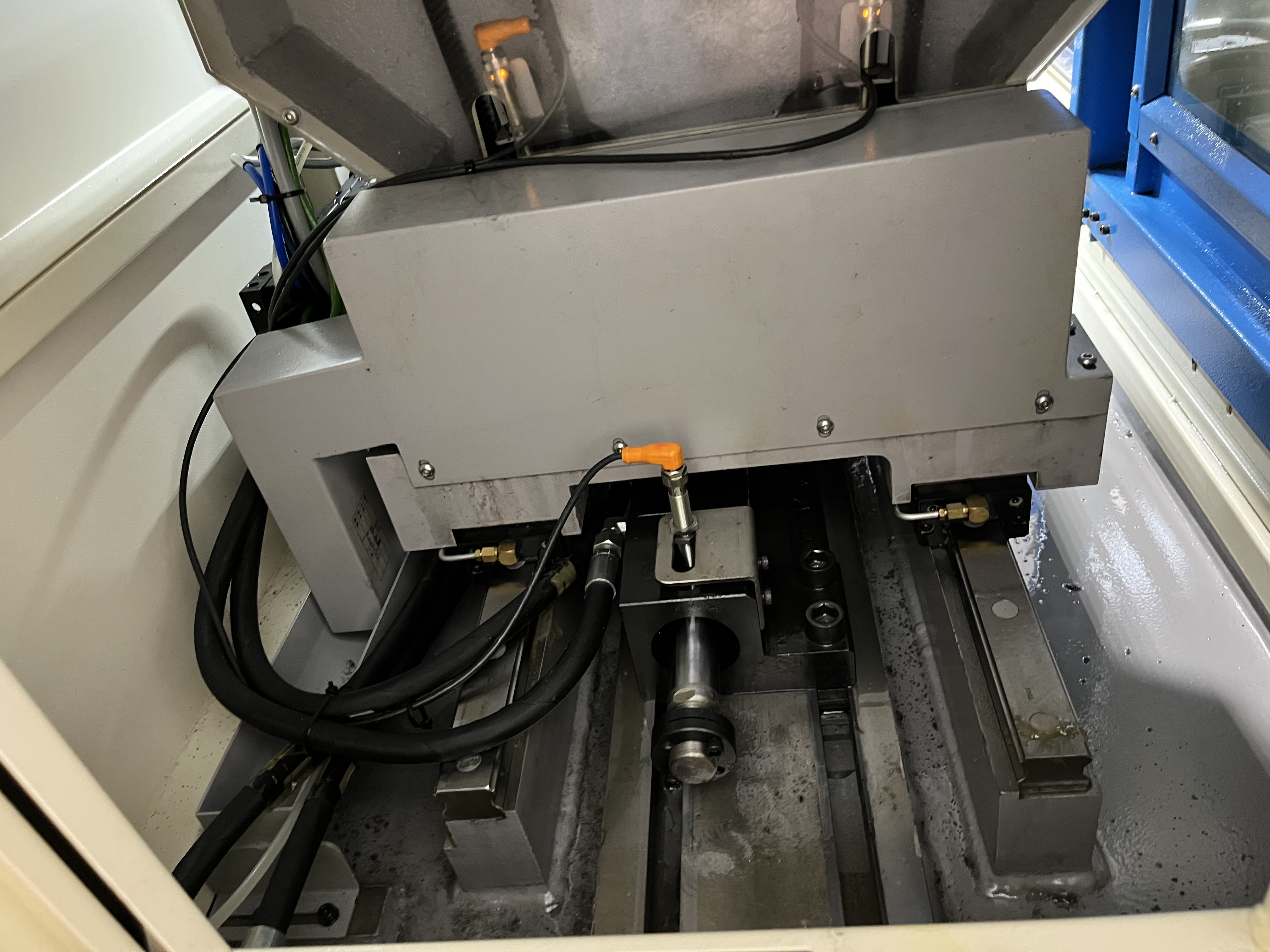
What Is Tramp Oil and Why It Matters
Tramp oil is hydraulic oil, way lubricant, or grease that leaks into the coolant system. Unlike the cutting oil formulated for deep hole drilling, tramp oil does not provide lubrication or cooling. It contaminates the coolant and causes a cascade of problems.
In my experience, coolant contaminated with more than 2% tramp oil by volume starts to show measurable performance drops. Tool life drops by 15-30%, surface finish degrades by one Ra class, and the coolant itself begins to smell as bacteria feed on the tramp oil. I have seen shops scrap hundreds of parts before they traced the issue back to a slow hydraulic leak adding oil into the coolant.
Sources of Tramp Oil in Deep Hole Drilling
| Source | Typical Entry Point | Oil Type | Volume |
|---|---|---|---|
| Hydraulic cylinder seals | Spindle clamp / tailstock | Hydraulic oil ISO 32-68 | Low, continuous |
| Way lubrication system | Linear guide rails | Way oil ISO 68-220 | Low, intermittent |
| Spindle bearing lubrication | Spindle housing | Spindle oil ISO 10-22 | Very low |
| Grease fittings | Bearing housings | Grease (NLGI 2) | Incidental |
| Part handling | Fixture / vise | Various | Sporadic |
The most common source I find is hydraulic cylinders on the clamping system. A seal starts leaking at a rate of one drop per minute, which does not seem like much. But one drop per minute adds up to roughly 4 liters per month. In a 400-liter coolant tank, that is 1% tramp oil contamination every month.
Effects of Tramp Oil on Deep Hole Drilling
Tramp oil floating on the coolant surface creates a film that blocks oxygen transfer. Anaerobic bacteria thrive in this environment. The bacteria produce sulfuric acid as a byproduct, which drops the coolant pH below 8.0. Once the pH drops, the coolant emulsion breaks down and loses its corrosion protection.
I have also noticed that tramp oil reduces the coolant’s wetting ability. The coolant cannot reach the cutting edge as effectively, which increases friction and heat at the drill tip. In gun drilling, this shows up as built-up edge on the drill margins and a rough surface finish on the bore wall.
Tramp oil can also clog the coolant filters prematurely. The oil coats the filter media and reduces flow rate. In one case, I traced a recurring coolant pressure alarm on a BTA machine to a tramp oil film clogging the 50-micron bag filters every 4 hours instead of the normal 40-hour change interval.
Methods for Removing Tramp Oil
Belt Skimmers
The belt skimmer is my go-to for most installations. A continuous polyurethane belt runs through the coolant surface. Tramp oil adheres to the belt and is scraped off into a collection container. Belt skimmers handle up to about 2 liters per hour of oil removal, depending on belt width and speed. They cost between 500 and 1500 USD and require minimal maintenance.
I mount the skimmer at the return end of the coolant tank, where the coolant is calmest and the oil has time to separate. Positioning matters. If the coolant is turbulent, the oil emulsifies and the skimmer cannot pick it up.
Coalescing Filters
For higher oil volumes, I use a coalescing filter system. The coolant is pumped through a media bed that causes small oil droplets to merge into larger drops. The larger drops float to the surface and are skimmed off. Coalescing filters handle 5-20 liters per hour and cost 3000-8000 USD.
I recommend coalescing filters for BTA systems with coolant tanks over 1000 liters. The higher upfront cost is justified by the reduced coolant replacement frequency.
Centrifugal Separators
Centrifugal separators spin the coolant at 3000-6000 RPM to separate tramp oil by density. They remove oil down to 0.5% concentration and also remove fine solids down to 5 microns. These units cost 10,000-25,000 USD but provide the cleanest coolant.
I use centrifugal separators on high-value machines where coolant quality directly affects part quality, such as medical implant drilling or aerospace fuel system components.
Comparison of Removal Methods
| Method | Capacity | Cost | Maintenance | Best For |
|---|---|---|---|---|
| Belt skimmer | 0.5-2 L/hr | $500-1500 | Low | Small tanks, light contamination |
| Coalescing filter | 5-20 L/hr | $3000-8000 | Medium | Large tanks, moderate contamination |
| Centrifugal separator | 10-50 L/hr | $10,000-25,000 | Medium-high | Critical applications, heavy contamination |
Prevention and Monitoring
I check the coolant surface every week for tramp oil. The test is simple: I look at the surface for rainbow-colored films or dark oil patches. If I see either, I investigate the source.
A small oil leak that runs for a week can contaminate hundreds of liters of coolant. I once found a hydraulic fitting on a BTA machine that was dripping 3 drops per minute. That single fitting was adding 8 liters of tramp oil per month to a 600-liter system. Fixing the fitting saved the shop 2000 USD per month in coolant replacement.
For early detection, I use a simple dip-and-read test. I take a coolant sample in a clear glass jar and let it sit for 30 minutes. If I see a distinct oil layer on top, the tramp oil concentration is over 1%. At that point, I run the skimmer and trace the source.
I run the oil removal system continuously, even when the machine is idle. If tramp oil is allowed to sit on the surface, it emulsifies into the coolant through the natural convection currents in the tank. Once emulsified, tramp oil is extremely difficult to remove and often requires a full coolant dump.
Key Takeaways
- Tramp oil above 2% concentration causes measurable drops in tool life and surface finish.
- One drop per minute from a leaking seal adds 4 liters of tramp oil per month.
- Belt skimmers are the most cost-effective removal method for most shops.
- Run oil removal equipment continuously, even during machine idle time.
- Fix the source of the leak rather than just treating the symptom.